Friends of Dunchurch Society

ARCHIVE PAGES - Dunchurch Railway Station

Dunchurch Railway Station

Dunchurch railway station was a railway station serving Dunchurch in the English county of Warwickshire on the Rugby to Leamington line.

Among the many schemes to build a line between Rugby and Leamington was one by the Rugby, Leamington and Warwick Railway Company. This later became known as the Rugby and Leamington Railway and received royal assent on 13 August 1846. The undertaking was sold to the London and North Western Railway on 17 November 1846 and the line opened on 1 March 1851.

When the line opened there were only two intermediate stations (at Birdingbury and Marton) despite Dunchurch's population of 6,061 at the time.[1] Dunchurch had to wait more than 20 years before the LNWR opened the station at the point where the railway crossed beneath the road to Coventry (now the A45 trunk road) 1¾ miles west of the village.

Dunchurch station received the same service as the other intermediate stations. Bradshaw's July 1922 timetable shows 10 trains a day to Rugby and 9 trains to Leamington Spa. The service was unchanged in the timetable of July 1938.

The station closed to passengers on 15 June 1959 and closed to freight on 2 November 1964. (Wikipedia)
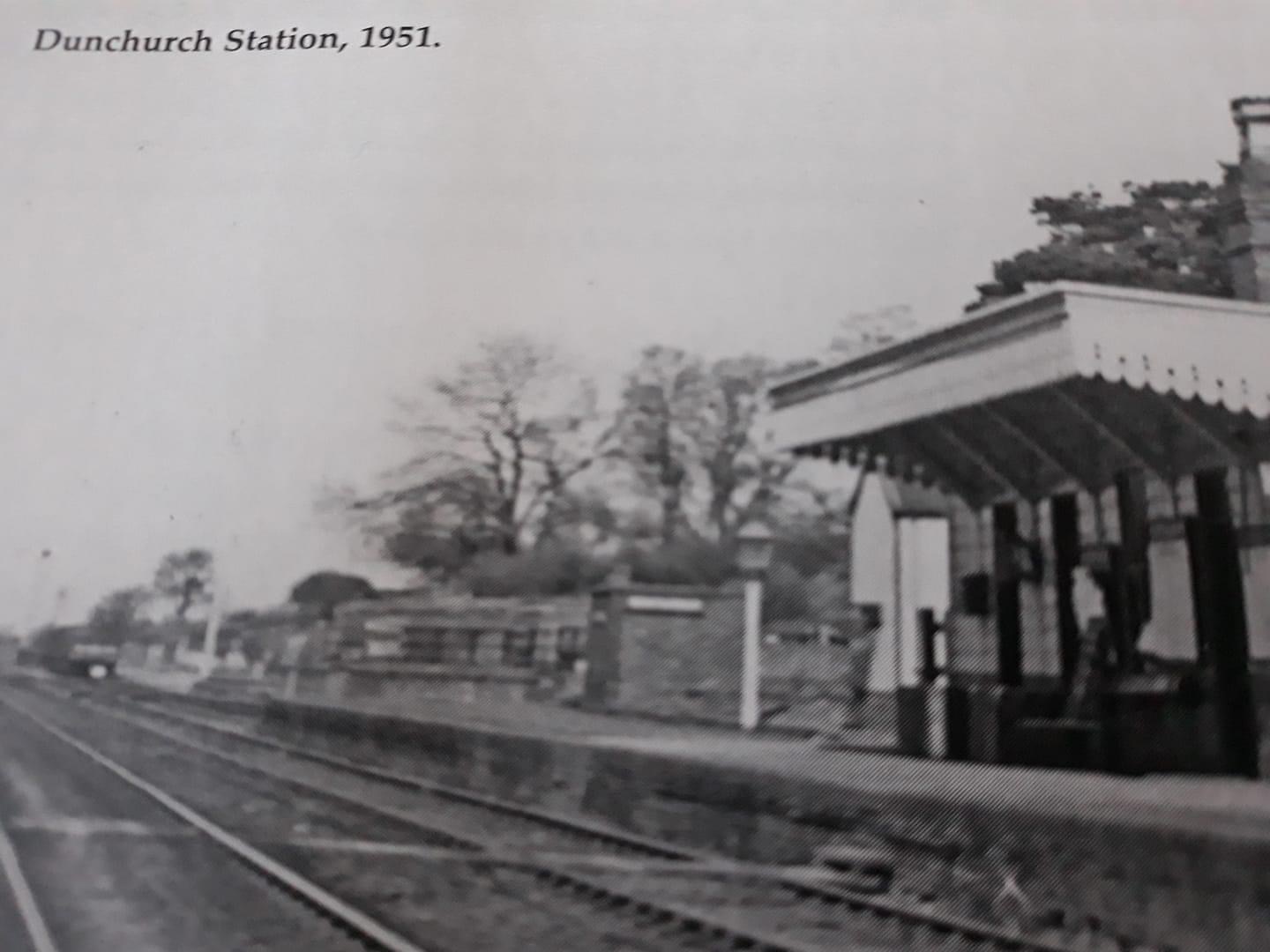
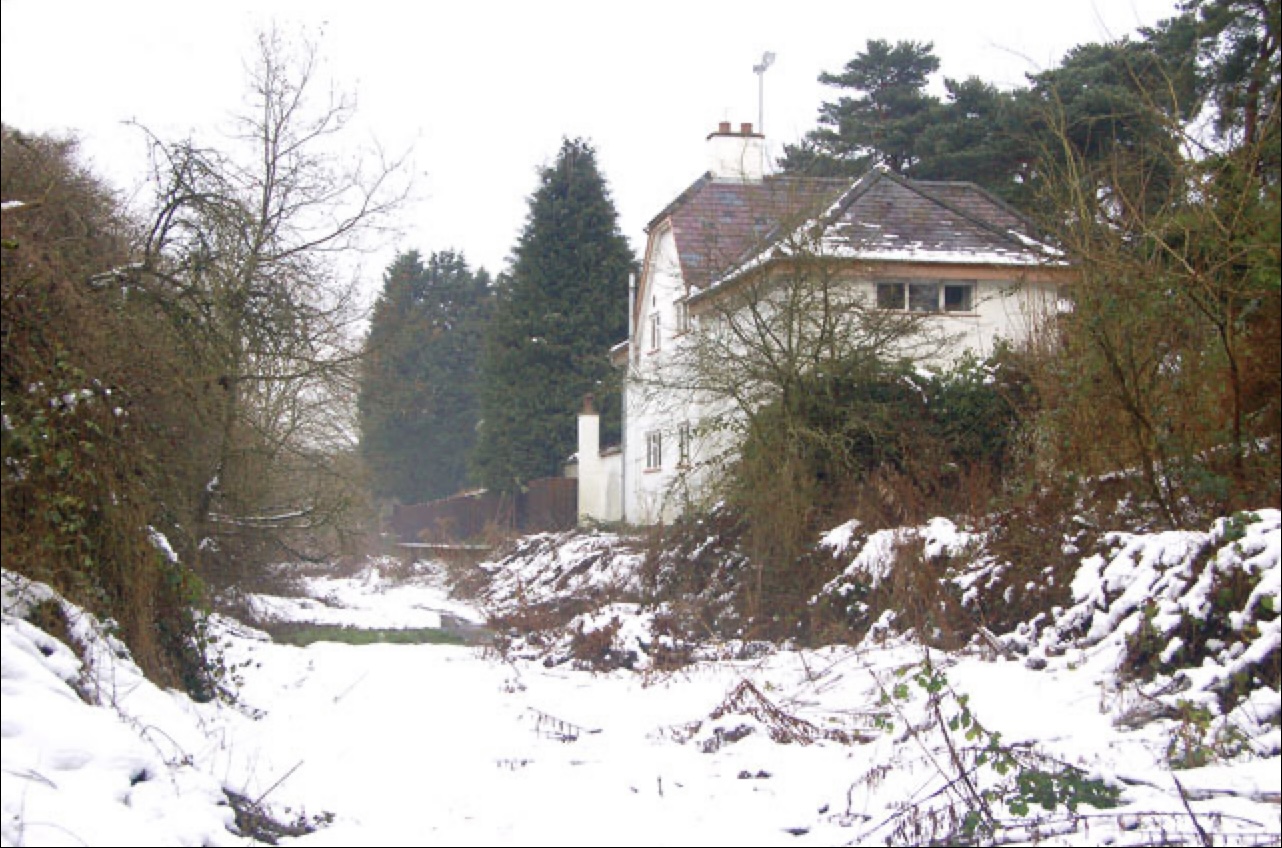
Railway Station 1951
Railway Station 2010
Location of Dunchurch Railway Station
The renovated Station Master's house 1970
The renovated Station Master's house 1970 (Gwyn Edwards)


The Station Master's house is now a private residence.
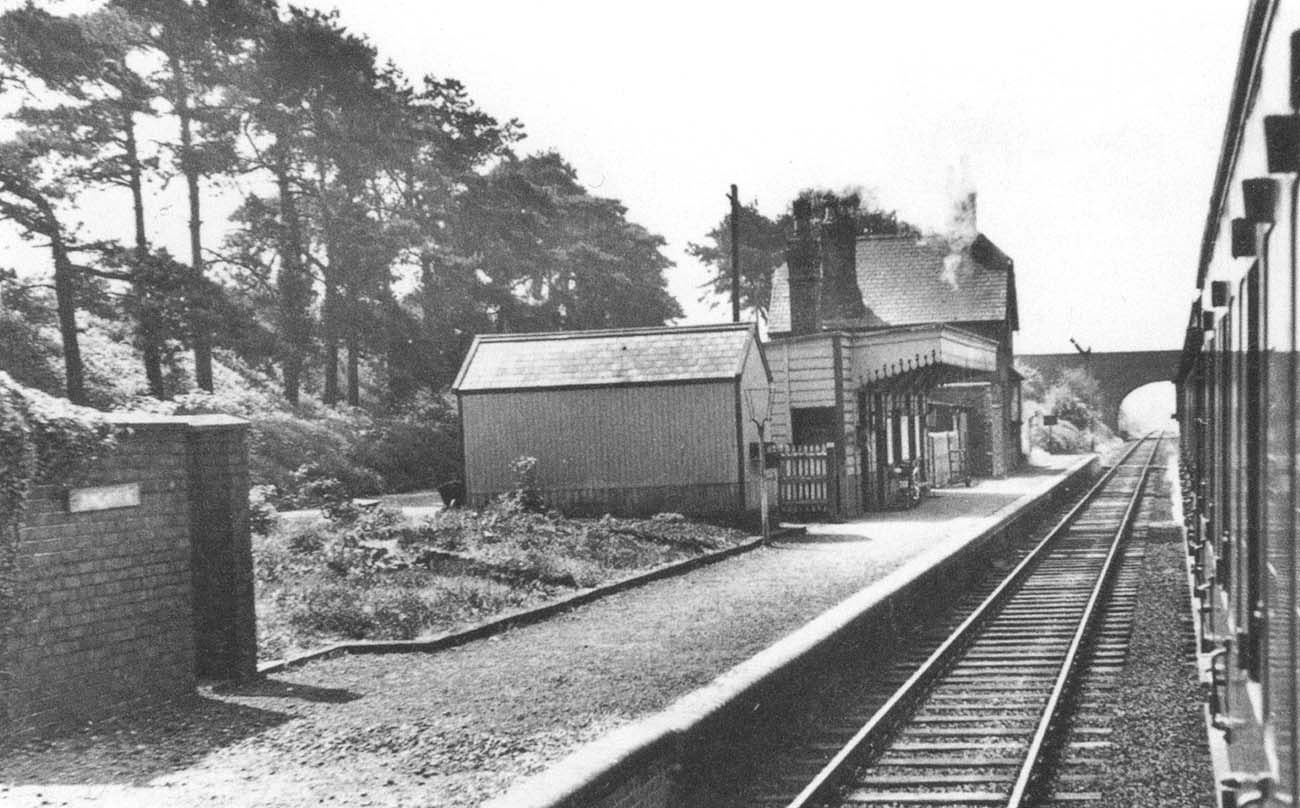
Dunchurch Railway Station
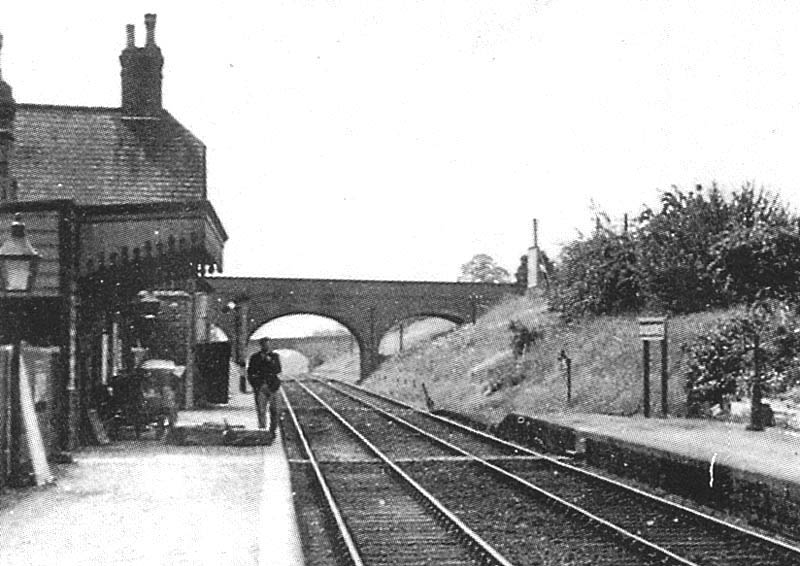
Looking along Dunchurch station's down platform towards Leamington on 16th May 1959. The basic configuration of the station had not changed since it had been built some eighty years previous. The only difference to the down platform is the removal of the fencing on which enamel signs were so prevalent in image 'lnwrdun3986'. The brick built building on the left is the Gentlemen's toilets, the sign fixed to its front being the station name board (running in board being the correct terminology) as the Gentlemen's sign was fixed to the side facing the platform buildings (as can be seen in image 'lnwrdun3962'). The step in the platform edge, in the foreground, indicates that the platform had been extended to accommodate longer trains. Most likely this was undertaken in 1884 when the line was doubled, some thirteen years after the station had been opened. (www.warwickshirerailways.com)
Dunchurch Railway Station

Close up showing Dunchurch station's separate timber built waiting room, the station master's house and shorter up platform on the left. The platform appears to have a porters luggage trolley with parcels on top and to the front. The canopy of the waiting room has been as a continuation of the roof line sloping backwards to prevent water falling on passengers. The up platform is shorter than the down and has a path raised slightly above the rail leading to a boarded barrow crossing to be used by passengers to gain access to and from the down platform. The boarded crossing in the foreground - opposite the station building - would be used by station staff only gaining access to the up platform via the step built in to the face of the platform. (www.warwickshirerailways.com)
Rear view of The OLd Lockup 1966
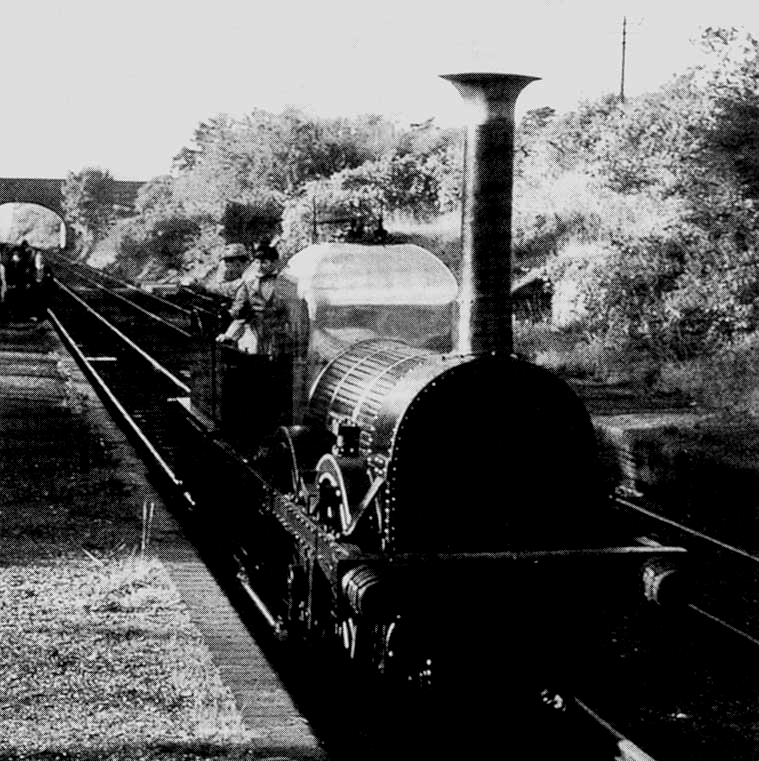
View of Liverpool & Manchester Railway 0-4-2 No 57 'Lion' standing at Dunchurch station's down platform circa 1961. 'Lion' received a new boiler in about 1845 and it was used in traffic until about 1858 being sold in 1859 to the Mersey Docks for use as a stationary engine. It was rediscovered when in 1928 it was replaced by an electric pump. A new tender based on contemporary drawings was also constructed. 'Lion' took part in the Liverpool and Manchester Railway centenary celebrations in 1930 and the London and Birmingham Railway centenary in 1938. Railway Station 2010

(warwickshirerailways.com)

Location of Dunchurch Railway Station
Liverpool & Manchester Railway 0-4-2 No 57 'Lion' approaches Dunchurch signal cabin circa 1961. Lion appeared in three films, 'Victoria the Great' in 1937, 'The Lady with the Lamp' in 1951 and most famously of all 'The Titfield Thunderbolt' in 1952. This latter film was to make her something of a celebrity in view of its popular appeal both to the public and railway enthusiasts. Lion was stored at the Crewe works and was not seen by the public, apart from her film appearances and railway publicity events such as that seen above. In 1967 she was loaned to Liverpool Museum by the Liverpool Engineering Society who then gifted her outright in 1970. In 1980 Lion took part in the 150th anniversary celebrations of the Liverpool and Manchester Railway at Rainhill under her own steam. Afterwards she made a number of working appearances at railway heritage centres and museums until 1989 when she was withdrawn from steaming for conservation reasons. Following a condition survey in 1992 which showed that Lion's original structure would need substantial modification if she were to be steamed again, the Trustees of National Museums Liverpool decided, on the basis of Lion's internationally important status, to conserve her for museum display only.

(warwickshirerailways.com)


London Road (A45)

Railway Station 2010

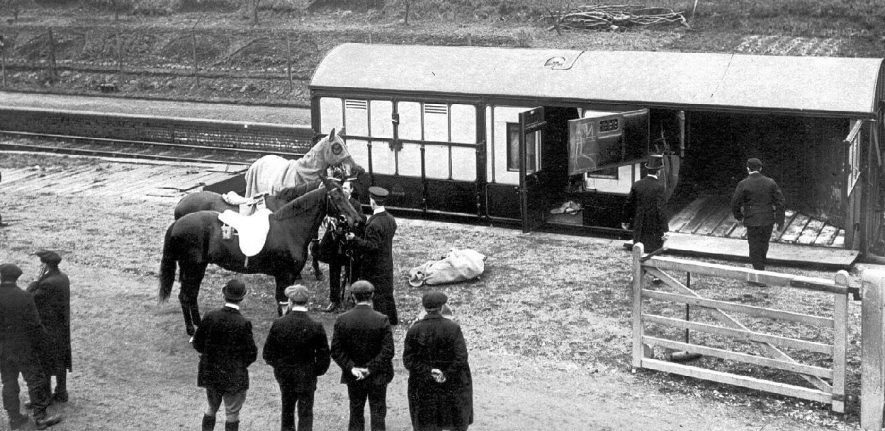
View of King George V's horses being disembarked from a LNWR horsebox by members of the royal household's staff at Dunchurch station. David Maltman writes, 'The vehicle is the double horsebox to D435 built for the royal train in 1900'. Prior to the Gallipoli Campaign, which involved tens of thousands of troops from Britain, Australia and New Zealand (ANZACS), troops involved in the campaign had to be marshalled at various locations across the country. One such place was in the Dunchurch area and during this period King George V visited Dunchurch to review the troops. March 1915.  (www.warwickshirerailways.com)
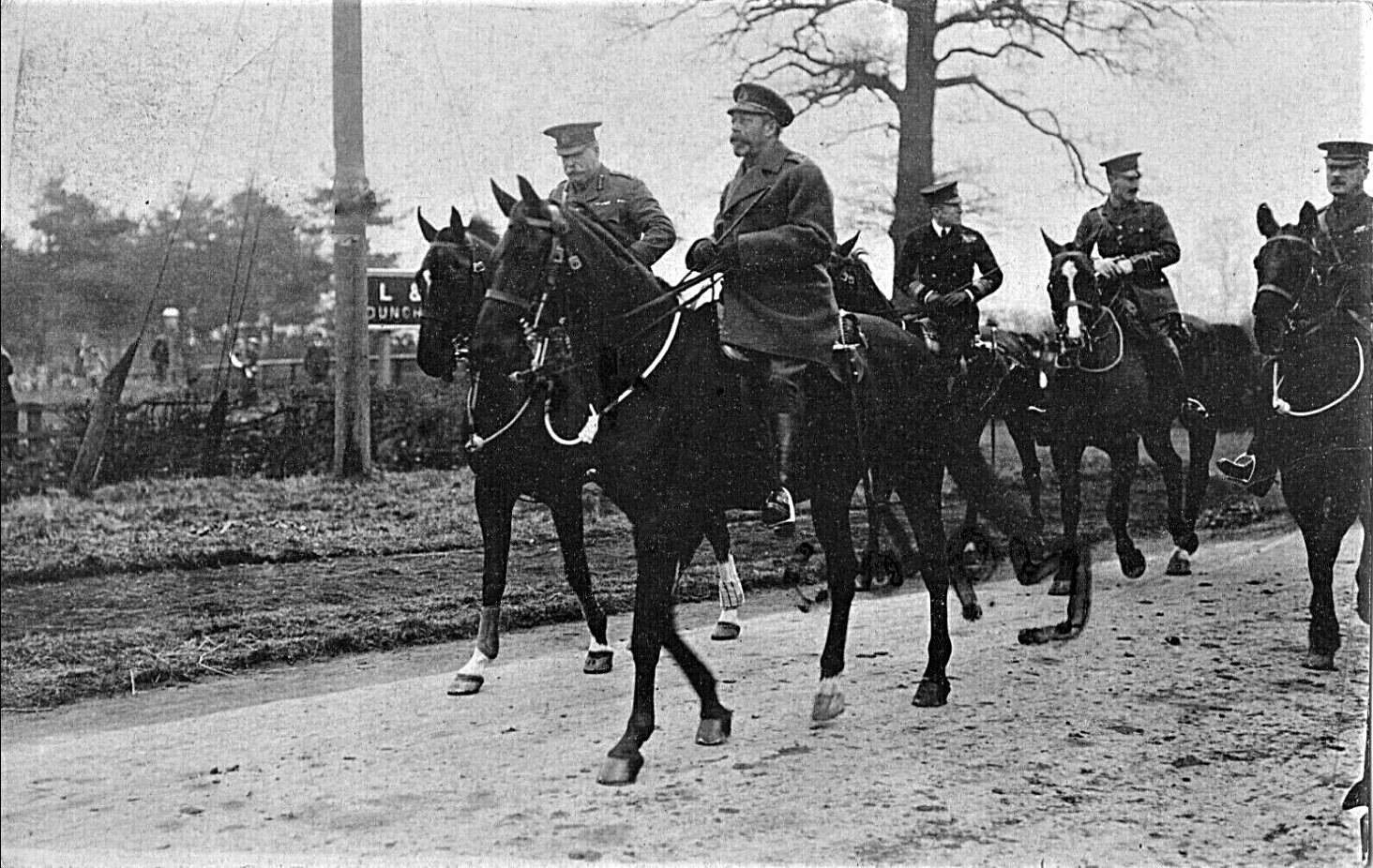
WW1 King George reviewing troops
WW1 King George V and senior officers inspecting 29th Division
Dunchurch 1915, London Road - leaving the station


Friends of Dunchurch, a charity formed on 6th September 2018 by like-minded residents who love Dunchurch and its heritage and wish to protect and enhance its environment in order to make the village a better place to live in, work in and visit.

CONTACT US
Email: friendsofdunchurch@gmail.com
Village Green House, The Green, Dunchurch CV22 6NX